or

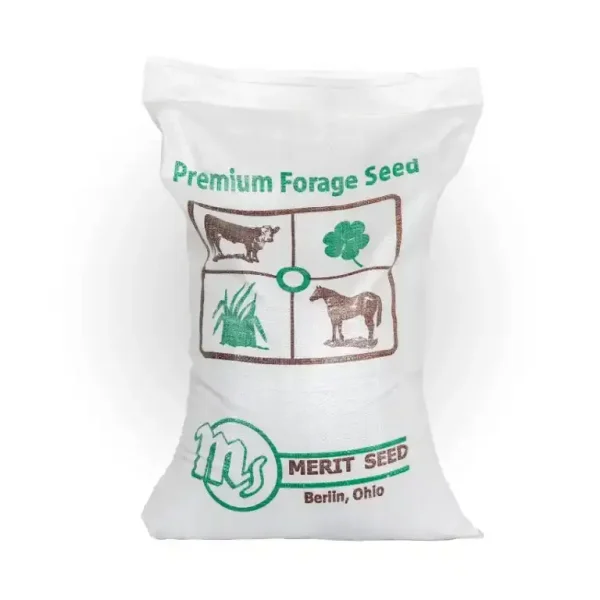
Organic SW Minto Meadow Fescue 50lb Bag

SKU

A cool-season perennial forage grass that provides highly digestible, palatable forage with strong winter hardiness.

Organic SW Minto Meadow Fescue 50lb Bag

$297.50

Out of stock

Description

Organic SW Minto Meadow Fescue is a cool-season, perennial forage grass known for strong winter hardiness, excellent palatability, and high fiber

digestibility compared to many other cool-season grasses. As a meadow fescue, it fits well in hay and pasture mixes, especially with legumes like alfalfa, and is suited for grazing systems and organic grass stands. Meadow fescue typically yields well in fertile soils and provides consistent seasonal growth, contributing quality forage with good digestibility for livestock and improved stand performance under organic management.

Related Products

Frequently Asked Questions About Our Products

What is the recommended seeding rate and planting depth?
  • Planting Depth: Plant seeds 1/4 to 1/2 inch deep into a finely prepared, firm seedbed to ensure proper soil-to-seed contact.

  • Seeding Rate: Broadcast or drill at 10–12 lbs per acre for pure stands, or 4–6 lbs per acre when incorporating into forage or pasture mixes

  • Ideal pH: Thrives best in soils with a pH ranging from 6.0 to 7.0.

  • Soil & Fertility: Prefers well-drained to moderately drained soils rich in phosphorus and potassium. Limit heavy nitrogen applications to prevent weed competition.

  • Nitrogen Fixation: Pre-inoculation with host-specific Rhizobium bacteria promotes natural nitrogen fixation, cutting down on synthetic fertilizer costs.

  • Protection & Stand Establishment: The protective coating guards young seedlings against early moisture stress and soil-borne diseases for more uniform germination.

  • Spring Window: Plant from late March through May once soil temperatures reach 50°F.

  • Late Summer / Frost Seeding: A secondary window opens from August through early September. You can also frost-seed by broadcasting onto frozen ground in late winter (February–March).

  • Harvest Timing: Cut for hay or graze at 10–12% bloom to maximize digestibility and crude protein levels.

  • Overwintering: Allow a 4-to-6-week recovery period prior to the first hard autumn frost so plants can store root reserves for winter survival.